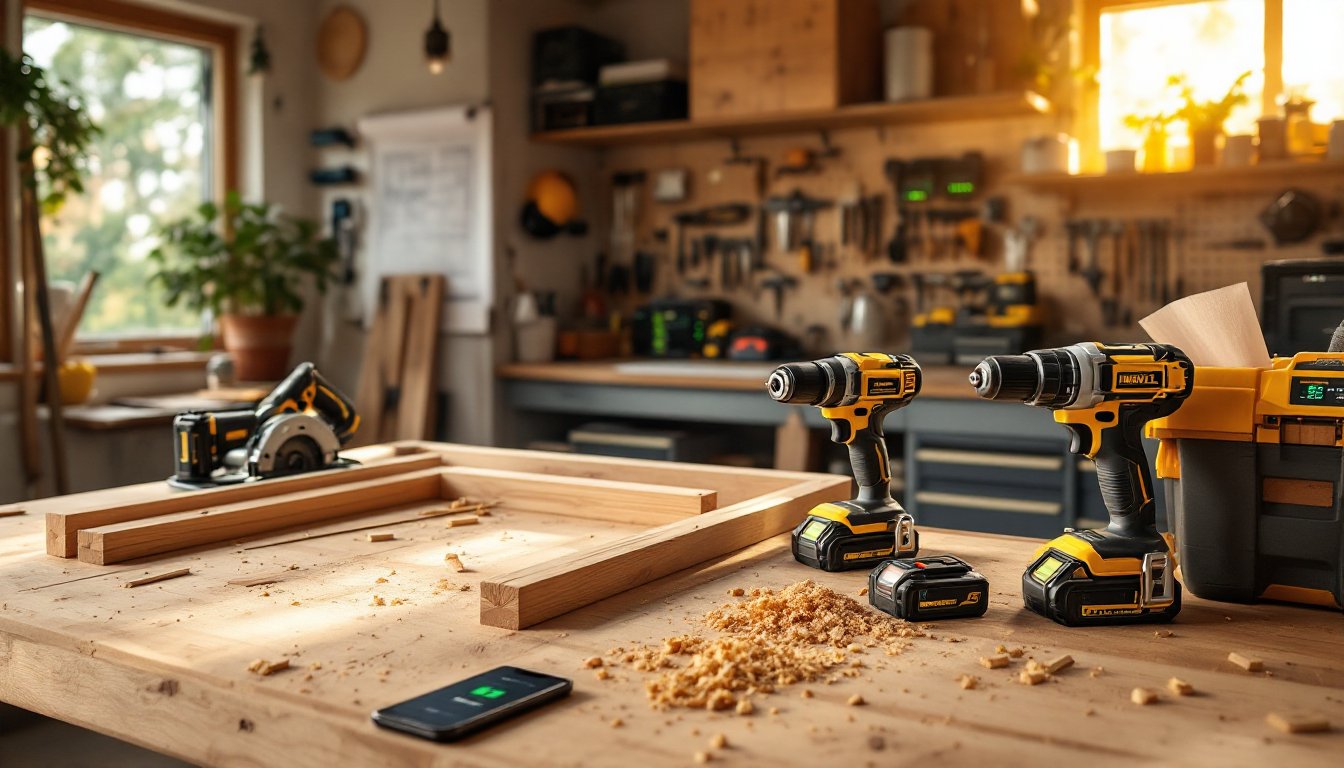
The power tool industry isn’t standing still. Walk into any home center today and you’ll notice something different from five years ago: fewer cords, smarter tech, and tools that actually seem designed for real people instead of just pros. Whether you’re framing a deck, installing trim, or just keeping a basic workshop stocked, these shifts matter. They affect what you buy, how long it lasts, and whether it’ll handle the jobs on your list. Understanding where the industry is headed helps DIYers make smarter purchasing decisions and get the most from their tool budget.
Table of Contents
ToggleKey Takeaways
- Cordless and battery-powered tools have become the practical default for homeowners, with modern lithium-ion platforms like DeWalt’s 20V MAX and Milwaukee’s M18 offering runtime and power comparable to corded tools for most residential tasks.
- Investing in a single battery ecosystem early on significantly reduces per-tool costs, as each new tool only requires the bare unit rather than additional chargers and battery packs.
- Smart technology integration in modern power tools—including brushless motors with electronic controllers, Bluetooth connectivity, and safety features like electronic brakes—adds genuine value for home users without requiring adoption of unnecessary gimmicky features.
- Compact and ergonomic designs now deliver high performance in lighter, more maneuverable packages, with 18V or 20V models hitting the sweet spot between capability and comfort for general home use.
- Building a focused tool kit around projects you’ll actually tackle—starting with the core trio of drill/driver, impact driver, and circular saw—is smarter than purchasing oversized combo kits with unused tools.
- Prioritizing quality tools from established platforms with long-term parts support and battery recycling programs is the most sustainable approach, as a durable tool lasting 15 years beats multiple disposable replacements.
The Shift Toward Cordless and Battery-Powered Tools
Cordless tools have moved from convenience items to serious workhorses. Lithium-ion battery technology has improved dramatically, with 18V and 20V platforms now delivering runtime and power that rival corded equivalents for most residential tasks. Major manufacturers have invested heavily in battery ecosystems, meaning a single battery platform can power everything from drills to miter saws to leaf blowers.
This matters for homeowners because tool investment becomes cumulative. Buy into a solid battery system early, DeWalt’s 20V MAX, Milwaukee’s M18, or Makita’s 18V LXT, for example, and each new tool only requires the bare unit, not another charger and battery pack. That drops per-tool cost significantly after the first few purchases.
Battery capacity has also jumped. 4.0Ah to 6.0Ah packs are now standard, with 9.0Ah and 12.0Ah available for heavy-demand tools like circular saws and reciprocating saws. Runtime on a quality 5.0Ah battery can exceed 45 minutes of continuous cutting in framing lumber, which covers most weekend projects without a recharge.
One trade-off: corded tools still edge out cordless on sustained power for all-day professional use or stationary shop tools like table saws. But for the homeowner tackling intermittent projects, building a fence, hanging drywall, assembling furniture, cordless has become the practical default. Just keep a spare battery on the charger.
Smart Technology Integration in Modern Power Tools
Power tools are getting microprocessors, Bluetooth connectivity, and app integration. It sounds gimmicky until you see what it actually does. Brushless motors with electronic controllers adjust torque and speed in real time, preventing stripping screws, burning out bits, or bogging down in hard materials. This isn’t just pro-level stuff, mid-tier homeowner tools now include these features.
Some drills and impact drivers connect to smartphone apps that let users set custom torque limits, track battery health, and even locate a misplaced tool via Bluetooth. For someone managing multiple projects or a busy household shop, that last feature alone has value. You can also log runtime and charge cycles to predict when a battery is nearing end-of-life, avoiding surprises mid-project.
Another smart addition: electronic brakes and kickback detection. Circular saws and angle grinders can now sense bind-up and shut down in milliseconds, a real safety upgrade. Some miter saws include laser guides or LED shadow lines that show exact cut paths without fumbling with pencil marks. Many workshop projects benefit from this kind of precision, especially when cutting trim or making repeat angle cuts.
The downside? More electronics mean more potential failure points and shorter obsolescence cycles. A 1990s corded drill might run 30 years: a 2026 smart drill might not get software updates after five. For homeowners, the sweet spot is adopting useful tech, brushless motors, electronic brakes, while skipping features that feel like solutions in search of a problem.
Eco-Friendly and Sustainable Manufacturing Practices
Tool manufacturers are responding to demand for greener products, though results vary widely. Some brands now use recycled plastics in tool housings and packaging, and a few have phased out PVC and other less-recyclable materials. DeWalt, for example, has committed to using reclaimed ocean plastic in some product lines, a move that’s part marketing, part substance.
Battery disposal and recycling programs have expanded. Most major brands now offer take-back programs where you can drop off dead lithium-ion packs at retail partners or service centers. This matters because improperly discarded batteries are both a fire hazard and an environmental problem. If you’re cycling through batteries, use these programs.
Energy efficiency has improved, too. Brushless motors draw less current and generate less heat than older brushed designs, extending battery life per charge and reducing the energy needed for repeated recharging. It’s a small per-use difference, but it adds up over hundreds of cycles.
That said, planned obsolescence and proprietary battery platforms still create waste. A tool that’s functionally fine but incompatible with newer battery generations ends up in a landfill. The most sustainable choice for a homeowner is often buying quality tools from established platforms with long parts support, even if the upfront cost is higher. A tool that lasts 15 years beats three disposable replacements every time.
Compact and Ergonomic Designs for Home Use
Power tools have gotten noticeably smaller and lighter without sacrificing capability. Compact drill/drivers now weigh under three pounds with battery and still deliver 400+ in-lbs of torque, plenty for driving 3-inch deck screws or drilling into studs. This isn’t just about comfort: it’s about access. Smaller tools fit into tight spaces: inside cabinets, between joists, or overhead in cramped attics.
Ergonomics have improved across the board. Rubberized grips, better weight distribution, and side handles on larger tools reduce fatigue. For homeowners who aren’t swinging a drill eight hours a day, this might seem minor, but try holding a poorly balanced tool overhead while installing a ceiling fan and you’ll appreciate the difference.
Battery placement has also shifted. Many newer impact drivers and drills position the battery closer to the grip or in-line with the handle rather than hanging off the bottom. This changes the center of gravity and makes the tool easier to control, especially during overhead or angled work.
One caution: compact doesn’t always mean better. Ultra-small 12V tools are great for light-duty tasks, assembling furniture, hanging pictures, tightening cabinet hardware, but they’ll struggle with heavy framing, large-diameter holes, or dense hardwoods. For general home use, an 18V or 20V compact model hits the sweet spot: capable enough for real work, light enough to use comfortably.
Multi-Function Tools and Versatile Systems
Multi-tools and interchangeable-head systems are gaining traction, particularly among homeowners with limited storage. Oscillating multi-tools can cut, sand, scrape, and grout with quick-change accessories, useful for trim removal, undercutting door jambs, or cleaning up caulk lines. They won’t replace dedicated sanders or saws for big jobs, but they’re indispensable for detail work.
Some brands offer modular systems where a single motor unit accepts different attachments: string trimmer, pole saw, blower, edger. Ryobi and Milwaukee both make versions of this. If you’re maintaining a typical suburban lot, this approach saves money and garage space compared to buying four separate gas-powered tools. Performance is solid for residential use, though professional landscapers still tend toward dedicated units.
Combo kits are also smarter than they used to be. Instead of bundling six tools you’ll never use, many home maintenance guides recommend starting with a drill/driver, impact driver, and circular saw, the core trio that handles 80% of DIY tasks. Manufacturers now offer these in matched sets with two batteries and a dual charger, which is a better value than buying piecemeal.
Be realistic about what you’ll actually use. A seven-tool combo kit sounds appealing, but if the jigsaw and reciprocating saw sit untouched for three years, you’ve just paid for dead weight. Build your kit around projects you know you’ll tackle, then add specialty tools as needs arise.
Safety Innovations and User-Friendly Features
Safety features have become more sophisticated and more common in homeowner-grade tools. Electric brakes are now standard on most cordless circular saws, stopping the blade within two seconds of releasing the trigger instead of coasting for five or six. That’s a meaningful reduction in accidental contact injuries.
Kickback protection has improved, particularly on miter saws and table saws. Some models include flesh-sensing technology (like SawStop) that halts the blade on contact with skin, this tech is still pricey, mostly found on cabinet saws, but it’s trickling down. More accessible are riving knives and anti-kickback pawls, now included even on budget contractor saws.
Battery-powered tools have an inherent safety advantage: no extension cords to trip over, no risk of cutting a live cord, and no need to work near outlets in wet conditions. But they’re not foolproof. Always wear eye protection when cutting or grinding, and use hearing protection with high-RPM tools like routers, grinders, and circular saws. These aren’t optional, permanent hearing damage accumulates gradually, and you won’t notice until it’s too late.
Tool-free adjustments are another user-friendly trend. Depth and bevel stops on saws, blade changes on jigsaws, and bit swaps on routers increasingly use levers, dials, or keyless chucks instead of requiring wrenches. This speeds setup and reduces the chance of losing small parts in the grass or shop floor. Many DIY repair tutorials now assume these features, so if you’re following along with older tools, be ready to adapt.
One safety feature to watch: LED work lights integrated into the tool body. They illuminate the cut line or work surface and are genuinely helpful in dim garages, crawlspaces, or outdoor evening projects. Not all models include them, but it’s worth checking, it’s a small detail that improves both safety and accuracy.
Conclusion
The power tool industry in 2026 is more focused on the homeowner than ever. Cordless platforms offer real flexibility, smart features add genuine value, and safety innovations reduce risk without adding complexity. Buy thoughtfully: invest in a solid battery ecosystem, prioritize tools you’ll actually use, and don’t skip safety gear. The right tools make projects faster, cleaner, and a lot more enjoyable.