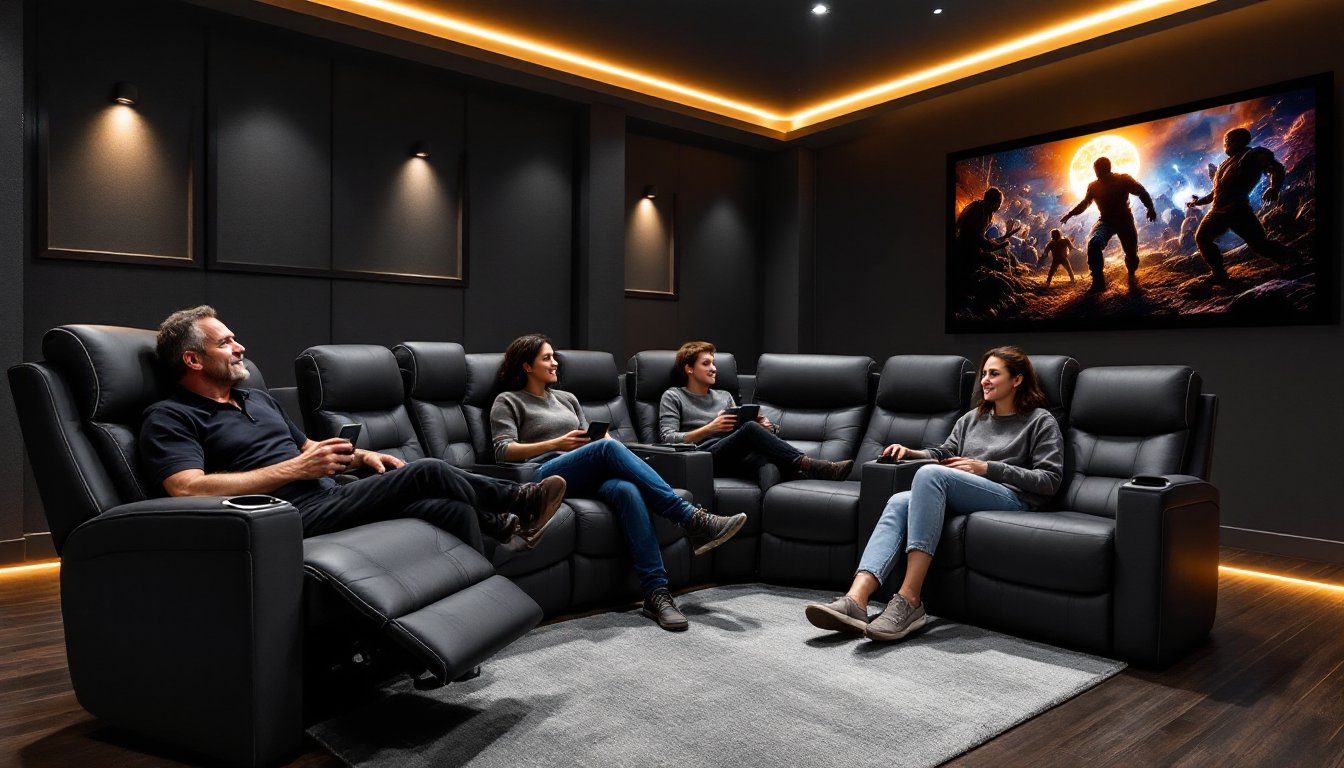
Choosing the right seating can make or break a home theater setup. While individual recliners have their place, sectionals offer a unique combination of flexibility, comfort, and visual cohesion that’s hard to beat in a dedicated media room. They maximize seating capacity without the visual clutter of multiple separate chairs, and they create an immersive, lounge-style environment that makes every movie night feel like an event. This guide walks through what makes theater sectionals different from living room furniture, the features worth investing in, and how to select the right configuration and materials for years of reliable use.
Table of Contents
ToggleKey Takeaways
- Home theater seating sectionals maximize comfort and capacity by providing 22-24 inches of usable width per seat while creating visual unity and eliminating awkward gaps in media rooms.
- Power recline systems offer convenience with push-button control and programmable positions, but require careful wire management and add significant weight—a three-seat power sectional can exceed 400 pounds.
- Choose durable upholstery based on usage: top-grain leather resists spills and ages well, while performance fabrics with 30,000+ double rub counts provide a budget-friendly middle ground for regular movie nights.
- Measure your room carefully before purchasing—theater sectionals need 60-70 inches of depth when fully reclined and at least 24 inches of clearance on all sides for safe passage and code compliance.
- Prioritize kiln-dried hardwood frames with high-density foam (1.8-2.0 lbs per cubic foot) and at least 10-year warranties to ensure long-term comfort and durability in your dedicated media room.
- Modular configurations are easier to move through doorways and reconfigure, while fixed sectionals offer greater stability—consider modular systems for second-floor installations or homes with tight space constraints.
Why Sectionals Are Perfect for Home Theater Rooms
Sectionals solve a fundamental layout challenge in home theaters: how to seat multiple people comfortably without blocking sightlines or creating awkward gaps. Unlike standalone recliners, sectional configurations allow continuous seating along walls or in tiered rows, which is especially useful in smaller rooms where every square foot counts.
They also eliminate the armrest problem. Traditional theater chairs have individual armrests on both sides, which can feel confining when you’re settling in for a three-hour movie marathon. Sectionals share armrests between seats or eliminate them entirely in the middle, giving each person more usable width, typically 22 to 24 inches per seat versus 20 inches in standalone recliners.
From a design perspective, sectionals create visual unity. A matched set looks intentional and polished, whereas a collection of mismatched recliners can read as an afterthought. For families or frequent hosts, the communal seating arrangement encourages interaction without sacrificing personal space, since most theater sectionals include recline functionality for each seat.
Another practical advantage: sectionals are modular. If the room layout changes or the homeowner moves, most systems can be reconfigured or expanded with additional modules. This flexibility is harder to achieve with fixed rows of individual chairs.
Key Features to Look for in Home Theater Sectionals
Not all sectionals are built for prolonged sitting or the specific demands of a media room. Home theater models include features that living room sectionals often skip.
Reclining Mechanisms and Power Options
Manual recline mechanisms use a pull tab or lever and are generally reliable with fewer moving parts to fail. They’re also quieter, no motor hum during dialogue-heavy scenes. But, they require clearance behind the seat (typically 6 to 8 inches) for the backrest to tilt.
Power recline systems run on electric motors and offer push-button control, often with programmable memory positions. Many 2026 models include USB-C charging ports and wireless charging pads built into the armrests, which is convenient but adds complexity. Power mechanisms require access to outlets, so plan wire routing early, running extension cords across the floor is a tripping hazard and a code violation in some jurisdictions if not properly managed.
Some high-end units now feature articulating headrests and lumbar support adjustment, both of which can be controlled independently from the main recline. This is worth considering if household members have different height or back support needs. Be aware that power components add weight: a three-seat power reclining sectional can weigh 400+ pounds, which matters for second-floor installations or homes with crawl space foundations.
Built-In Storage and Cup Holders
Most theater sectionals include center consoles between seats with storage compartments and cup holders. Cup holders should be deep enough (at least 3.5 inches) to secure a standard pint glass or insulated tumbler without tipping. Shallow holders are nearly useless.
Storage compartments are useful for remotes, charging cables, and small items, but check the access method. Lift-top lids are easier to use mid-movie than pull-out drawers, which require leaning forward and can interfere with reclined positions. Some models include cooling cup holders powered via USB, a nice touch, though not essential.
Look for designs that integrate theater-specific features like tray tables that fold out from armrests, especially useful for snacks or laptops. Avoid gimmicky add-ons like built-in speakers in the headrest: standalone audio systems will always outperform furniture-mounted drivers.
Choosing the Right Size and Configuration
Measure the room before browsing catalogs. Home theater sectionals are bulkier than standard sofas, and online photos can be misleading.
Start with the viewing distance. For a 65-inch screen, the ideal seating distance is 8 to 10 feet: for 85 inches, it’s closer to 10 to 13 feet. Mark that distance from the screen, then measure how much depth remains for the sectional. Most theater recliners need 60 to 70 inches of total depth when fully reclined, including clearance behind the seat.
Width is the next constraint. A typical three-seat sectional spans 85 to 95 inches wide. L-shaped configurations can exceed 120 inches on the long side. If the room is narrower than 12 feet, a straight sectional is usually a better fit than an L-shape, which can crowd walkways and block doorways.
Modular vs. fixed configurations: Modular systems use individual seats that connect with brackets or clips. They’re easier to move through doorways and can be rearranged, but connection points can shift over time, creating gaps. Fixed sectionals are built as continuous units, more stable, but difficult to navigate around tight corners or staircases. For second-floor theaters, modular is often the only practical option.
Consider tiered seating if the room allows. A second row elevated 8 to 12 inches above the first improves sightlines and mimics commercial theater layouts. Pre-built riser platforms are available, or a DIYer can frame a riser with 2×8 or 2×10 joists over a plywood deck. Check local codes: permanent risers may require railings if the elevation exceeds a certain threshold (often 30 inches, but this varies).
Don’t forget walkways. Leave at least 24 inches of clearance on either side of the sectional for safe passage, and 36 inches if the room serves as a primary egress route. Fire codes in many jurisdictions require unobstructed paths to exits.
Top Materials and Upholstery Options for Durability
Upholstery choice affects durability, comfort, and maintenance. Home theaters see heavy use, often with food and drinks, so prioritize cleanability.
Top-grain leather is the most durable option and ages well. It resists spills, wipes clean easily, and doesn’t trap odors. Expect to pay a premium, top-grain leather sectionals typically start around $3,000 for a three-seater and can exceed $8,000 for larger configurations with power features. Leather does require occasional conditioning to prevent drying and cracking, especially in low-humidity climates.
Bonded leather is cheaper but not recommended. It’s a thin layer of leather over a fabric or vinyl backing, and it peels within a few years of regular use. It’s not a long-term investment.
Performance fabrics, such as those treated with stain-resistant coatings (Crypton, Sunbrella, or similar), are a middle-ground option. They’re softer than leather, available in more colors, and handle spills reasonably well if blotted quickly. Look for fabrics with a double rub count (abrasion resistance) of at least 30,000 for residential use: commercial-grade fabrics rate at 100,000+ and are worth considering for high-traffic households.
Microfiber is budget-friendly and soft, but it shows wear faster and can absorb stains if not treated. It’s a decent choice for light use or secondary seating, but not ideal for a primary theater that sees weekly movie nights.
Frame construction matters as much as upholstery. Quality sectionals use kiln-dried hardwood frames (oak, maple, or birch) with corner blocking and screwed joints. Avoid frames made entirely of particleboard or softwood, which sag over time. Check the warranty, frames should be covered for at least 10 years, and reclining mechanisms for 3 to 5 years.
Foam density affects long-term comfort. High-density foam (1.8 to 2.0 lbs per cubic foot) holds its shape better than standard foam (1.5 lbs or lower). Seat cushions should use high-resilience (HR) foam or a combination of HR foam and down wrapping for the best balance of support and softness.
Design Styles That Complement Your Media Room
Theater sectionals come in a range of styles, from classic to contemporary. The right choice depends on the room’s architecture and the homeowner’s overall design goals.
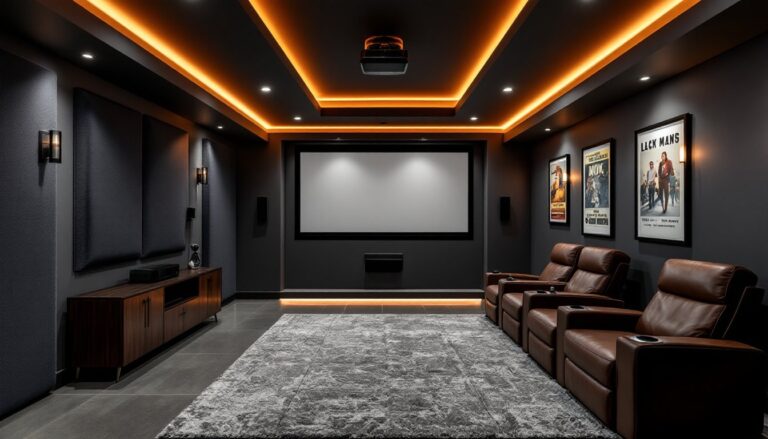
Traditional styles feature rolled arms, tufted backs, and nailhead trim. They work well in homes with classic architecture or wood-paneled media rooms. These designs often come in darker leather tones (espresso, cognac, burgundy) that hide wear and create a cozy, lounge-like atmosphere. Traditional sectionals pair well with coffered ceilings, crown molding, and vintage movie posters.
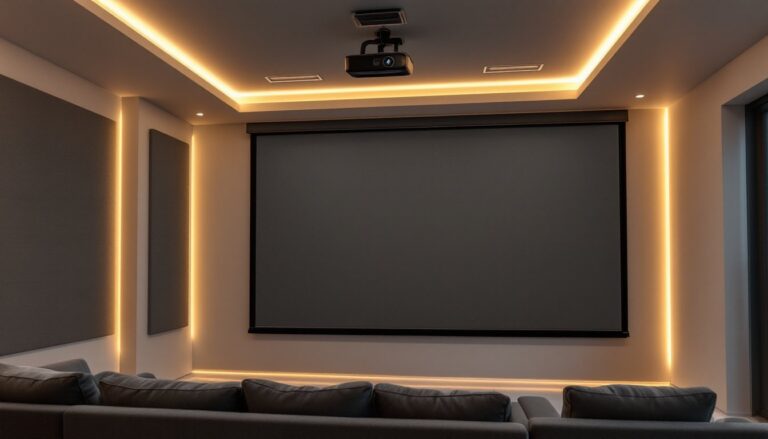
Modern and contemporary designs emphasize clean lines, low-profile arms, and minimal detailing. They’re typically upholstered in neutral fabrics (charcoal, slate, taupe) and work in rooms with minimalist finishes, smooth drywall, recessed lighting, and floating shelves. These styles often incorporate features like modular configurations and smart controls that appeal to tech-forward homeowners.
Transitional styles blend traditional comfort with modern simplicity. They might have track arms instead of rolled, and simpler stitching patterns without heavy tufting. Transitional sectionals are the most versatile, they fit in a wide range of rooms without clashing with existing decor.
Color choice affects the room’s ambiance. Darker upholstery (black, charcoal, espresso) reduces light reflection, which is critical in a dedicated theater. Light-colored sectionals (cream, gray, beige) can work in multi-purpose rooms that double as living spaces, but they show dirt more readily and can create glare if the screen is very bright.
For those aiming for a luxurious, high-end aesthetic, consider sectionals with contrast stitching, quilted panels, or two-tone upholstery. These details add visual interest without overwhelming the space.
Finally, think about how the sectional integrates with the room’s acoustics. Upholstered furniture absorbs sound, which is generally helpful in reducing echo. But, if the room is over-dampened (too much soft material), dialogue can sound muffled. Balance upholstered seating with hard surfaces like wood flooring or drywall, and consider consulting an acoustician if building a high-performance theater.