If you’ve been running a portable air purifier in every bedroom and family room, you already understand the value of clean air. But there’s a better approach: an entire home air purifier works directly with your HVAC system to filter the air throughout your house, no need to haul units from room to room or replace a half-dozen filters. These systems integrate into your existing ductwork, treating air at the source before it circulates. For homeowners dealing with allergies, pets, wildfire smoke, or poor indoor air quality, a whole-house solution offers consistent filtration without the clutter of multiple standalone devices.
Table of Contents
ToggleKey Takeaways
- An entire home air purifier integrates into your HVAC system to filter all air throughout your house, eliminating the need for multiple portable units and reducing clutter.
- Whole-house systems capture particles as small as 0.3 microns, including allergens, pet dander, and mold spores, providing significant relief for households with allergies or respiratory sensitivities.
- HEPA filtration and UV light purifiers are the two most common types; HEPA excels at particulate removal while UV systems neutralize biological contaminants like mold and bacteria.
- Professional installation typically costs $1,200–$2,500 for a HEPA system, and requires checking duct space, blower capacity, and static pressure to ensure proper performance.
- Regular maintenance—replacing HEPA filters every 6–12 months and UV bulbs annually—is essential to maintain airflow and prevent your entire home air purifier from reducing heating and cooling efficiency.
- Running your blower continuously for optimal filtration adds approximately $20–$50/month to energy costs, but whole-house systems reduce HVAC wear by capturing fine particulates before they reach your equipment.
What Is an Entire Home Air Purifier and How Does It Work?
An entire home air purifier (sometimes called a whole-house air purifier or central air purification system) installs directly into your home’s HVAC ductwork, typically near the return air plenum or air handler. Unlike portable units that clean air in a single room, these systems filter all the air moving through your heating and cooling system.
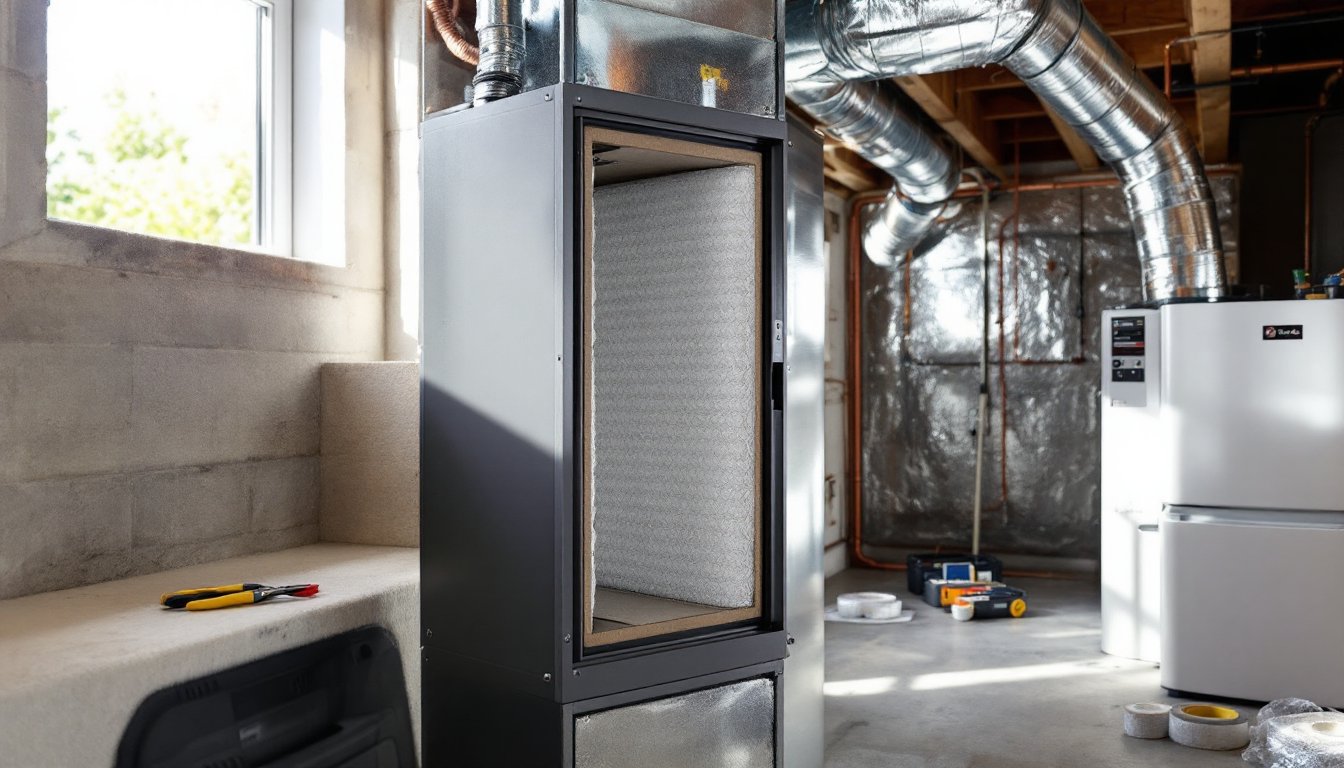
Most systems consist of a filter cabinet or air cleaner housing that mounts in the duct run. As your furnace or air handler fan runs, it pulls air through the purifier before distributing it through your home. Some models use electrostatic filtration, which charges particles so they stick to collection plates. Others rely on HEPA-grade filters or activated carbon media to trap contaminants.
Here’s the critical part: your HVAC blower must be running for the system to work. That means if you want continuous filtration, you’ll need to set your thermostat fan to “on” instead of “auto”, or install a system with its own fan. Running the blower continuously can add to your energy bill (typically $20–$50/month, depending on your blower motor efficiency), but it ensures the air is always cycling through the filter.
Whole-house systems don’t replace your standard HVAC filter. They work plus to it. The furnace filter (usually a 1-inch pleated MERV 8–11) catches larger particles like dust and lint, while the air purifier handles fine particulate matter, allergens, VOCs, and microbial contaminants.
Key Benefits of Installing a Whole-House Air Purification System
The most obvious benefit is coverage. A single unit treats the entire home, no need to buy, maintain, or plug in multiple portable purifiers. If you have a 2,000-square-foot house, you’d otherwise need three to five standalone units to match the same level of filtration.
Another advantage: reduced allergens and respiratory irritants. Whole-house systems with HEPA or electrostatic filtration can capture particles as small as 0.3 microns, including pollen, pet dander, mold spores, and dust mite debris. For households with asthma or seasonal allergies, this can mean fewer symptoms and better sleep quality.
These systems also address odors and volatile organic compounds (VOCs). Models with activated carbon filters or UV light technology can break down cooking smells, pet odors, off-gassing from new furniture, and cleaning product fumes. It’s especially useful in homes with attached garages, where vehicle exhaust and stored chemicals can seep into living spaces.
Finally, whole-house air purifiers reduce HVAC system wear. By capturing fine particulate before it reaches your blower motor and evaporator coil, you keep components cleaner. That can extend the life of your furnace or heat pump and improve overall system efficiency. It won’t eliminate the need for annual maintenance, but it does lighten the load on your equipment.
Types of Entire Home Air Purifiers: Which One Is Right for You?
Not all whole-house air purifiers work the same way. The two most common types are HEPA filtration systems and UV light purifiers, though many homeowners combine both for layered protection.
HEPA Filtration Systems
True HEPA filters are the gold standard for particulate removal. They capture 99.97% of particles 0.3 microns or larger, which includes most allergens, bacteria, and fine dust. In whole-house applications, you’ll typically see HEPA-type or MERV 16–17 filters, which offer near-HEPA performance without the extreme static pressure that true HEPA creates in residential duct systems.
These systems require a dedicated filter cabinet installed in the return duct or a bypass loop that routes air through the filter and back into the main duct. The cabinet is usually 16–20 inches deep, so measure your mechanical room or closet before buying. You’ll also need to account for the pressure drop, HEPA filters restrict airflow more than standard filters, so your blower may need to work harder. In some cases, an HVAC tech will install a variable-speed ECM blower to compensate.
HEPA systems shine in homes with pets, smokers, or occupants with severe allergies. They’re also a smart choice in wildfire-prone regions, where fine particulate from smoke is a seasonal concern. Many high-performing air purifiers reviewed for 2026 use HEPA technology for similar reasons.
UV Light Air Purifiers
Ultraviolet germicidal irradiation (UVGI) systems use UV-C light (wavelength around 254 nanometers) to kill or inactivate mold, bacteria, and viruses as air passes through the duct. These units mount inside the ductwork near the evaporator coil or air handler and run whenever the blower is on.
UV systems don’t remove particles, they neutralize biological contaminants. For that reason, they’re most effective when paired with a good particulate filter. If your home has chronic mold issues (common in humid climates or homes with poor ventilation), a UV purifier can help prevent growth on the evaporator coil, which is a common breeding ground.
Installation is straightforward: the UV lamp mounts in a short duct section or directly in the air handler cabinet. Most units draw minimal power, around 40–100 watts, and the bulbs last 9,000–14,000 hours (roughly one to two years of continuous use). You’ll need to replace the bulb annually to maintain effectiveness, which costs $50–$100 depending on the model.
UV systems are a good fit for homes with mold sensitivity, immunocompromised occupants, or recurring HVAC odors. They won’t help with dust, pollen, or VOCs, so combine them with a HEPA or carbon filter for comprehensive coverage.
Installation Considerations: What Homeowners Need to Know
Installing a whole-house air purifier isn’t a plug-and-play project. Most systems require cutting into the return duct, mounting a filter cabinet or UV lamp, and sometimes upgrading electrical service to the air handler. This is typically a professional install unless you have HVAC experience and the right tools (tin snips, a drill, duct sealant, and sheet metal screws at minimum).
Start by measuring your available space. HEPA cabinets can be bulky, some models need 20 inches of clearance in the direction of airflow. If your furnace sits in a tight closet or crawlspace, you may need a side-mount or return grille filter instead of a traditional cabinet.
Next, check your blower capacity. Adding a high-efficiency filter increases static pressure in the duct system. If your furnace blower is already undersized or your ducts are restrictive, you could reduce airflow below the manufacturer’s spec, which hurts heating and cooling performance. An HVAC tech can measure static pressure with a manometer and recommend a compatible filter or blower upgrade if needed.
Electrical work is minimal for most systems. UV purifiers typically plug into a 120V outlet or wire directly into the air handler’s control board. HEPA systems don’t need power unless they include a standalone fan, in which case you’ll need a dedicated circuit.
Permits usually aren’t required for air purifier installation, but if you’re modifying ductwork significantly or adding new electrical circuits, check with your local building department. Some jurisdictions treat HVAC alterations as permit-worthy work.
Cost varies widely. A basic UV light system runs $400–$800 installed, while a whole-house HEPA cabinet with professional installation typically costs $1,200–$2,500. Electrostatic models fall somewhere in between. Factor in annual filter or bulb replacement costs when budgeting long-term.
Maintenance Tips to Keep Your Whole-House Air Purifier Running Efficiently
Whole-house air purifiers need regular attention to maintain performance. Neglect them, and you’ll end up with reduced airflow, higher energy bills, and a system that barely cleans the air.
For HEPA and pleated filter systems, replace the filter every 6–12 months depending on usage and air quality. If you run the blower continuously or live in a high-dust area, plan on the shorter interval. Some filters are washable, but most aren’t, check the manufacturer’s spec. A clogged filter restricts airflow, forcing your blower to work harder and potentially triggering a high-limit switch or pressure fault.
To replace a filter, turn off the furnace at the breaker, open the cabinet door (usually secured with thumbscrews or clips), slide out the old filter, and install the new one with the airflow arrow pointing toward the blower. Don’t skip the arrow, installing a filter backward can damage the media and reduce filtration efficiency.
UV lamp systems require annual bulb replacement. Even if the lamp still glows, UV-C output diminishes over time, dropping below effective germicidal levels after about a year. Mark your calendar and order a replacement bulb from the manufacturer, generic bulbs may not match the correct wavelength or wattage. While you’re at it, wipe down the bulb surface with a soft cloth and isopropyl alcohol to remove dust buildup, which can block UV transmission.
Electrostatic purifiers with washable collection plates need cleaning every 1–3 months. Remove the plates, rinse them in warm soapy water or run them through the dishwasher (top rack, no heat dry), and let them air-dry completely before reinstalling. Wet plates can arc or short out the ionizer.
Finally, inspect the ductwork around the purifier annually. Look for air leaks at seams or connections, especially where the filter cabinet joins the duct. Seal any gaps with foil-backed HVAC tape or mastic sealant, not cloth duct tape, which degrades over time. Leaky ducts allow unfiltered air to bypass the purifier, reducing overall system effectiveness.
For homeowners interested in integrating air quality monitoring with smart home technology, several purifiers now offer Wi-Fi connectivity and app-based filter alerts. Similarly, home tech buying guides often cover air quality sensors and HVAC controllers that automate blower scheduling based on indoor pollution levels. These tools can simplify maintenance and improve filtration consistency without constant manual adjustments.