Lafayette homeowners understand that remodeling isn’t just about aesthetics, it’s a strategic investment that adapts their homes to Louisiana’s unique climate, evolving family needs, and a competitive real estate market. Whether expanding a cramped galley kitchen or converting a dated bathroom into a modern retreat, local projects face specific challenges: humidity that warps wood, soil conditions that affect foundations, and permitting requirements that differ from neighboring parishes. This guide walks through the most popular remodel types in Lafayette, budgeting strategies that account for regional material costs, and how to navigate local building considerations before the first wall comes down.
Table of Contents
ToggleKey Takeaways
- Home remodeling in Lafayette offers strong ROI with homeowners recovering 60-80% of investment on kitchen and bathroom upgrades, making it a strategic alternative to relocating in an appreciating housing market.
- Lafayette’s high humidity (70-90%) demands moisture-resistant materials like quartz countertops, engineered hardwood, and proper ventilation systems to prevent mold growth and structural damage—non-negotiable upgrades that save costly remediation.
- Kitchen renovations typically cost $25,000-$45,000 locally with cabinetry consuming 30-40% of the budget; prioritize moisture-resistant plywood construction and luxury vinyl plank flooring over traditional hardwood to handle Louisiana’s climate challenges.
- Budget a 15-20% contingency for surprises when remodeling pre-1990 homes, verify contractor licensing through the Louisiana State Licensing Board, and plan projects for October-April to avoid hurricane season weather delays.
- Bathroom remodels require exhaust fans sized to bathroom square footage with direct outside venting, cement board with waterproofing membranes in wet areas, and fixture upgrades to meet current plumbing code—investments that deliver strong ROI and long-term reliability.
Why Lafayette Homeowners Are Investing in Remodeling Projects
Lafayette’s housing market has seen steady appreciation over the past five years, making strategic remodels a smarter financial move than relocating. Homeowners can recoup 60-80% of their investment on kitchen and bathroom upgrades, especially in established neighborhoods near downtown and the Oil Center.
The region’s climate drives many remodel decisions. High humidity levels (often 70-90%) accelerate mold growth in poorly ventilated spaces, making bathroom exhaust upgrades and moisture-resistant materials non-negotiable. Homes built before 2000 often lack adequate ventilation systems, and retrofitting proper airflow prevents costly remediation down the line.
Functional updates also top the priority list. Open floor plans that connect kitchens to living areas suit how families actually use their homes, and potential buyers expect them. Adding a mud room with built-in storage addresses Louisiana’s rainy season practicality. These aren’t cosmetic tweaks: they’re structural and layout changes that require permits and often involve load-bearing wall removal.
Energy efficiency drives another wave of projects. Upgrading to Low-E windows, adding spray foam insulation in attics, and installing programmable thermostats cut cooling costs significantly in a region where air conditioning runs eight months a year. Utility rebates through SLEMCO and LUS sometimes offset 10-15% of material costs for qualifying efficiency upgrades.
Most Popular Home Remodeling Projects in Lafayette
Kitchen Renovations
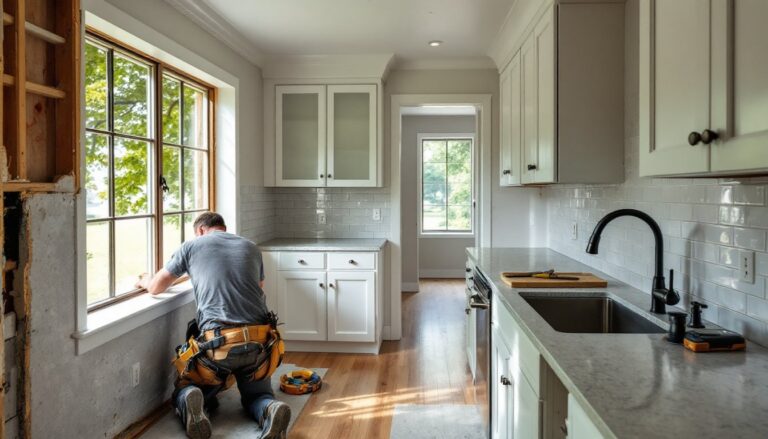
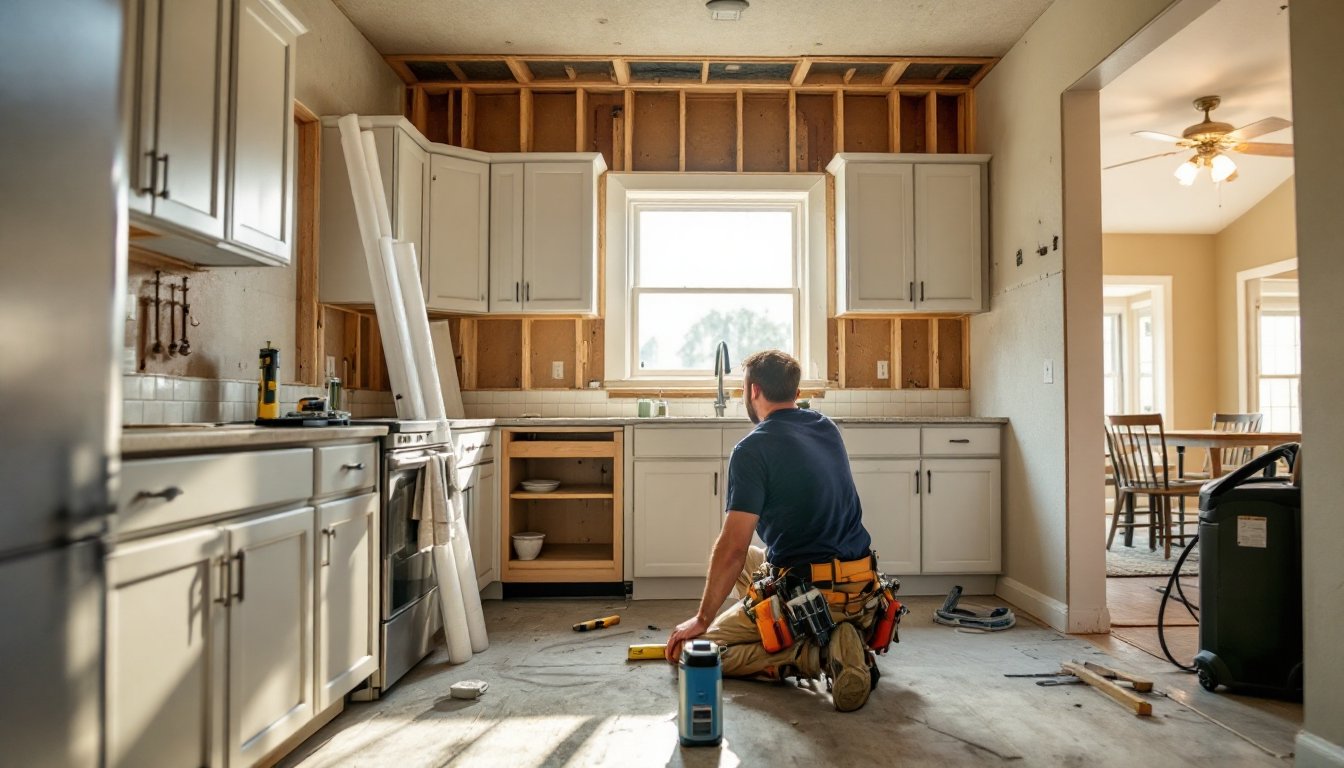
Kitchen remodels in Lafayette typically fall into two categories: cosmetic refreshes (cabinets, countertops, backsplash) or full gut jobs that relocate plumbing and add square footage. A mid-range kitchen renovation runs $25,000-$45,000 locally, though costs swing based on cabinetry choice and whether the footprint changes.
Cabinetry represents 30-40% of the budget. Stock cabinets from big-box stores work for tight budgets, but semi-custom options from regional suppliers offer better fit and finish for Lafayette’s older homes with non-standard dimensions. Moisture-resistant plywood box construction beats particleboard in humid climates, check the interior material, not just the door style.
Countertop choices matter beyond looks. Quartz outperforms granite in Louisiana’s humidity because it’s non-porous and won’t harbor mold in seams. Expect to pay $55-$90 per square foot installed for mid-grade quartz. Laminate remains a practical choice at $25-$40 per square foot, especially for rental properties or pre-sale flips.
Electrical upgrades often surprise first-time remodelers. Adding a dedicated 20-amp circuit for a microwave or upgrading to a 50-amp range circuit requires a licensed electrician and permit through Lafayette Consolidated Government. Budget $150-$300 per new circuit, plus inspection fees.
Flooring needs to handle spills and humidity. Luxury vinyl plank (LVP) with a wear layer of 12-20 mil holds up better than traditional hardwood, which expands and contracts with seasonal moisture swings. If going with hardwood, engineered products perform better than solid planks in this climate.
Bathroom Upgrades
Bathroom remodels deliver strong ROI in Lafayette, particularly when converting a tub-shower combo into a walk-in shower with zero-threshold entry, a feature aging-in-place homeowners prioritize. A full bathroom renovation typically costs $12,000-$22,000 for a standard 5×8 space.
Ventilation isn’t optional. Install an exhaust fan rated for the bathroom’s square footage (use the formula: CFM = room square footage x 1.1 for standard 8-foot ceilings). Fans should vent directly outside, never into an attic space. This prevents moisture buildup that rots roof decking, a common issue in older Lafayette homes.
Tile work makes or breaks the project. Cement board (not green board or drywall) goes behind all tile in wet areas. Use a waterproofing membrane like RedGard or Kerdi over the cement board before setting tile. Efflorescence, those white mineral deposits on grout, shows up fast in Louisiana if waterproofing steps are skipped.
Many homeowners considering bathroom upgrades rely on cost estimation tools to budget accurately before starting demolition. Plumbing relocations add $1,500-$3,000 to the baseline cost, so keeping fixtures in their existing locations saves money without sacrificing style.
Fixture choices affect long-term maintenance. Widespread faucets look sharp but have more failure points than single-handle models. Toilets with a MaP score of 800+ handle waste better and reduce service calls. Shower valves with pressure-balancing or thermostatic controls prevent scalding and meet current plumbing code.
Planning Your Lafayette Home Remodel: Budget and Timeline Tips
Start by establishing a realistic budget that includes a 15-20% contingency for surprises. Opening walls in homes built before 1990 often reveals outdated wiring, undersized plumbing, or pest damage that wasn’t visible during planning. That contingency isn’t optional, it’s insurance against project stalls.
Get multiple bids from licensed contractors. Lafayette requires contractors to hold a state license for projects over $50,000 or any work involving structural, electrical, or plumbing changes. Verify licenses through the Louisiana State Licensing Board for Contractors (LSLBC) website. Don’t hire based solely on the lowest bid: check references and ask to see recent projects with similar scope.
Timelines in Lafayette stretch longer than national averages due to weather delays and material availability. Expect 8-12 weeks for a full kitchen remodel, 4-6 weeks for a bathroom. Hurricane season (June-November) can halt exterior work for days at a time. Schedule demolition and framing during drier months (October-April) when possible.
Permit approval through Lafayette Consolidated Government typically takes 5-10 business days for straightforward projects. Structural changes, additions, or historical district work require plan review and take longer. Budget $300-$800 for permit fees depending on project scope. Skipping permits risks failed inspections during a future home sale and potential fines.
Homeowners researching contractors often turn to service provider platforms that compile verified reviews and licensing information in one place. Material lead times fluctuate, but custom cabinetry, special-order tile, and specific appliance models can take 6-12 weeks to arrive. Order long-lead items before demolition starts to avoid paying contractors to sit idle.
Navigating Lafayette’s Climate and Building Considerations
Lafayette sits in Climate Zone 2A per the International Energy Conservation Code (IECC), which dictates minimum insulation values and moisture control strategies. Attic insulation should hit R-30 to R-49, but many older homes barely reach R-19. Blown-in cellulose or fiberglass batts work, but spray foam creates an air seal that reduces cooling loads significantly.
Foundations in Lafayette deal with expansive clay soils that shift with moisture changes. Pier-and-beam foundations common in pre-1970s homes require periodic leveling. Slab foundations need proper grading and drainage to prevent cracking. Any addition or structural change should include a soils assessment, budget $400-$700 for a geotechnical report if adding square footage.
Flood zone status affects project feasibility and cost. Check FEMA flood maps before finishing a basement (rare in Lafayette) or converting a garage into living space. Properties in Special Flood Hazard Areas (SFHA) face stricter building elevation requirements. Flood insurance premiums spike if finished living space sits below Base Flood Elevation (BFE).
Termite protection isn’t optional. Pre-treat any new lumber with borate solutions, and maintain a termite bond with annual inspections. Subterranean termites cause millions in damage across Acadiana annually. Pressure-treated lumber for any wood in contact with concrete or soil is code-required and common sense.
Roofing and siding choices need to handle wind and rain. Lafayette occasionally sees tropical storms with sustained winds over 60 mph. Architectural shingles rated for 110-130 mph wind resistance and properly installed with six nails per shingle (not four) perform better. Fiber cement siding resists moisture and insects better than wood, though it costs $6-$10 per square foot installed versus $3-$8 for vinyl.
Choosing the Right Remodeling Approach for Your Project
Decide early whether to DIY, hire a general contractor, or use a hybrid approach. Structural work, plumbing, electrical, and HVAC modifications require licensed professionals in Louisiana. Painting, demo, flooring installation, and finish carpentry are DIY-friendly for homeowners with intermediate skills and the right tools.
General contractors coordinate subcontractors, pull permits, and manage timelines, but they add 15-25% markup on labor and materials. For projects over $30,000 or anything involving multiple trades, a GC prevents scheduling chaos and ensures work meets code. For smaller cosmetic projects, acting as your own GC and hiring subs directly saves money but demands time and coordination skills.
Design-build firms handle both design and construction under one contract, streamlining communication but offering less flexibility to swap contractors mid-project. This approach works well for homeowners who want a single point of accountability and don’t have strong design opinions. Costs run higher, but timelines often stay tighter.
Some homeowners prefer a phased approach, completing one room at a time to spread costs over multiple years. This works for cosmetic updates but complicates projects involving shared systems (HVAC, plumbing, electrical). Running new ductwork or replumbing makes sense to do once, not in stages.
Safety gear isn’t negotiable regardless of approach. Safety glasses, dust masks (N95 minimum for demolition), hearing protection, and work gloves should be on-site before the first swing of a hammer. Cutting cement board, tile, or pressure-treated lumber generates silica dust and chemical particulates that damage lungs with repeated exposure. Rent a HEPA-filtered shop vac for dusty work.
For complex projects like whole-home renovations or additions, detailed project planning resources help homeowners compare costs across different scopes and prioritize work based on budget constraints. Tool rental often beats buying for one-off projects. A wet tile saw rents for $50-$75 per day versus $200-$600 to purchase. Pneumatic nailers, demolition hammers, and laser levels fall into the same rent-versus-buy calculation.
Material selection affects both budget and longevity. Buying contractor-grade materials from local suppliers rather than big-box stores sometimes costs 10-15% more upfront but includes better warranty support and expert advice. For tile, plumbing fixtures, and cabinetry hardware, that expertise prevents costly mistakes.