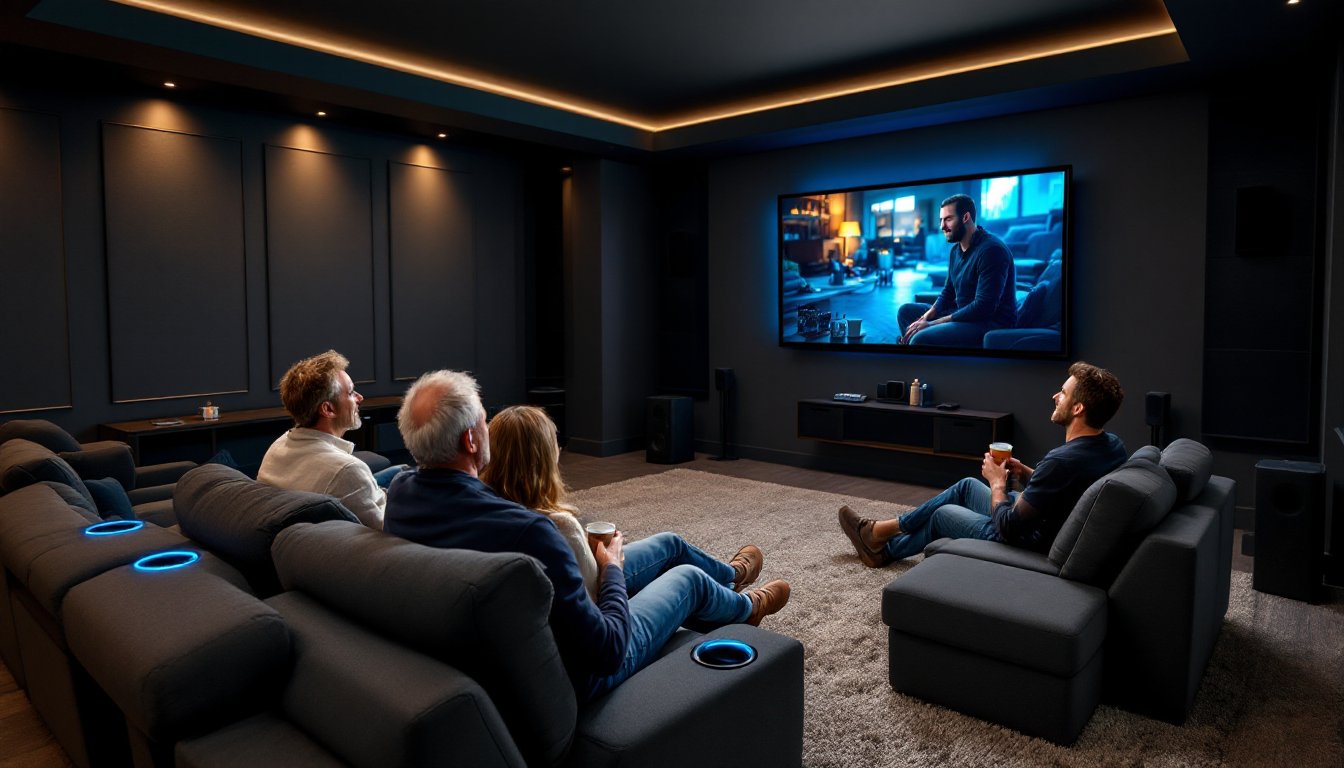
A dedicated home theater setup isn’t complete without the right seating. While rows of individual recliners work for some spaces, a sectional sofa offers flexibility, comfort, and a more inviting atmosphere for movie nights and binge-watching sessions. The right sectional turns a basement or media room into a genuine entertainment hub, one that balances theater-style features with everyday livability. Choosing the right model means understanding how theater-specific features, spatial constraints, and material choices all impact the final result.
Table of Contents
ToggleKey Takeaways
- A home theater sectional sofa maximizes seating efficiency and accommodates various room layouts while eliminating bad sightlines, making it ideal for basements and media rooms.
- Essential features for a home theater sectional include built-in cup holders, storage consoles, and power recliners with proper clearance—plan for 6 to 8 inches of wall space for full recliner extension.
- Proper viewing distance should be 1.5 to 2.5 times your screen’s diagonal size; measure your room carefully and use scaled templates to avoid costly ordering mistakes.
- Performance fabrics like Crypton or Sunbrella offer the best balance of durability, comfort, and maintenance for home theater use, especially in high-traffic spaces with pets or children.
- Position your sectional with the center seat aligned to the screen and maintain 12 to 24 inches of clearance behind seating for surround sound immersion and proper acoustics.
- Plan cable management and lighting placement before positioning the sectional, and use dimmers on recessed ceiling lights to prevent screen glare during viewing sessions.
Why a Sectional Sofa Is Perfect for Your Home Theater
Sectionals excel in home theater settings because they maximize seating without the rigid layout of individual chairs. Unlike traditional sofas that seat three or four people in a straight line, sectionals wrap around corners and adapt to room shapes, especially useful in rectangular basement spaces or bonus rooms above garages.
The continuous seating arrangement keeps groups together. There’s no “bad seat” in the middle where someone’s wedged between armrests. Everyone gets a clear sightline to the screen, and the open configuration makes it easy to shift positions during long viewing sessions.
Sectionals also offer better space efficiency than multiple pieces of furniture. A well-configured L-shape or U-shape can seat six to eight people while leaving floor space open for walkways and equipment. This matters in rooms where you’re balancing a projector setup, equipment racks, and acoustic treatments.
Another advantage: sectionals ground the room visually. In larger spaces, a single sofa can look lost against a big screen. A sectional anchors the seating area and creates a defined zone for viewing, which helps with room acoustics and sight line planning.
Finally, sectionals accommodate different viewing preferences. Some people want to stretch out: others prefer sitting upright. A sectional with a chaise on one end and standard seating on the other gives everyone their preferred spot without requiring separate furniture pieces.
Essential Features to Look for in a Home Theater Sectional
Not all sectionals are built for theater use. The models designed specifically for media rooms include features that standard living room sectionals skip. Look for these key elements when shopping.
Built-In Cup Holders and Storage
Cup holders are non-negotiable for theater seating. They keep drinks stable and prevent spills on upholstery. The best designs place holders between seats in a shared console or in retractable armrest units. Avoid shallow holders, they won’t secure a 32-ounce tumbler or a standard pint glass.
Some theater sectionals include lighted cup holders with LED rings. It’s a nice touch for dark room viewing, but the feature adds cost and requires access to power outlets. Standard holders work fine if you’re budget-conscious.
Storage consoles between seats hold remotes, charging cables, and snacks. Look for lift-top designs that keep contents hidden but accessible. Drawer-style storage is harder to access in a dark room. Open trays work, but items slide around.
A few high-end models include cooler compartments in the center console. These keep drinks cold without trips to the kitchen, but they add weight and usually require a 120V outlet nearby. Consider whether the convenience justifies the added complexity.
Reclining Mechanisms and Power Options
Reclining seats are standard on theater sectionals, but the mechanism type affects comfort and longevity. Manual recliners use a lever or pull tab. They’re simple, reliable, and don’t need electricity. The trade-off: you’re limited to two or three preset positions.
Power recliners offer infinite positioning via electric motors. Most include separate controls for the backrest and footrest, so users can dial in their exact preferred angle. Many design publications, including those focused on luxury furniture trends, highlight power recliners as a premium feature in custom home theaters.
Power recliners require planning. Each motor needs a dedicated outlet, and running extension cords under a sectional is a code violation in most jurisdictions (NEC 400.8). Install floor outlets during room construction, or use in-floor cable raceways if you’re retrofitting.
Some power models add USB charging ports in the armrests or console. Useful for keeping phones and tablets charged during long viewing sessions, but they add to the per-seat cost.
Check the reclining clearance. Most mechanisms need 6 to 8 inches of wall clearance to fully extend. Measure your space before ordering, especially if you’re placing the sectional against a back wall.
Choosing the Right Size and Configuration for Your Space
Sectional sizing starts with measuring the room and understanding viewing distance. For home theaters, the ideal viewing distance is 1.5 to 2.5 times the screen’s diagonal measurement. A 100-inch screen (measured diagonally) needs seating positioned 150 to 250 inches (12.5 to 21 feet) back.
Measure your room’s usable depth, then subtract 36 inches for walkways and equipment clearance. What’s left is your maximum sectional depth. Most theater sectionals run 38 to 45 inches deep when reclined, so factor that into your layout.
For width, measure wall-to-wall and subtract 24 inches (12 inches on each side) for walkways. That’s your maximum sectional width. L-shaped configurations work best in rooms 14 feet wide or larger. Smaller spaces do better with a curved sectional or a straight sofa with a chaise.
Configuration options vary by manufacturer, but most theater sectionals are modular. You can order:
- Straight sections (armless seats that connect in a row)
- Corner wedges (90-degree sections for L-shapes)
- Chaise ends (extended footrest on one side)
- Curved sections (gentle radius for U-shaped layouts)
Sketch your room to scale on graph paper (¼ inch = 1 foot works well). Cut out paper templates of sectional pieces at the same scale and test different arrangements. This prevents expensive ordering mistakes.
Consider room entry points. Sectional pieces are bulky, some won’t fit through standard 32-inch interior doors or around tight stairwell turns. Measure doorways, hallways, and any turns between your delivery entrance and the theater room. Many manufacturers offer modular designs that break down into smaller components for easier delivery.
Material and Upholstery Options: Balancing Comfort and Durability
Upholstery choice affects both comfort and maintenance. Theater sectionals see heavy use, spills, pet hair, and constant contact, so material durability matters as much as initial appearance.
Leather (top-grain or full-grain) is the most durable option. It resists stains, wipes clean easily, and develops a patina over time. The downsides: it’s expensive, can feel cold initially, and may stick to bare skin in warm rooms. Leather also requires conditioning every 6 to 12 months to prevent cracking.
Bonded leather or leather match (leather fronts with vinyl sides and backs) cuts costs but doesn’t last as long. The bonded material can peel after a few years of use. If budget is tight, skip bonded leather entirely and choose a high-grade fabric instead.
Performance fabrics (polyester blends treated with stain-resistant coatings) are the sweet spot for most homeowners. Brands like Crypton and Sunbrella offer fabrics that repel liquids and resist fading. They’re softer than leather, easier to maintain than untreated fabrics, and hold up well to pets and kids.
Many resources focused on practical home decorating recommend performance fabrics for high-traffic areas like media rooms.
Microfiber is another solid choice. It’s soft, stain-resistant, and budget-friendly. The fabric can show wear patterns in high-contact areas (armrests, headrests) after a few years, but it’s easy to clean with a damp cloth.
Avoid velvet or linen in theater settings unless the room is adults-only and lightly used. Both fabrics stain easily and require professional cleaning.
For cushion fill, high-density foam (2.0 lbs/cubic foot or higher) provides firm support that won’t sag quickly. Some sectionals use memory foam toppers for added comfort, but they retain heat. Pocket coil systems (like those in mattresses) offer the best support and breathability, but they add significant cost.
Check whether cushion covers are removable and washable. Zippered covers make it easy to clean spills or refresh the sectional after heavy use.
Placement Tips for Optimal Viewing and Room Flow
Sectional placement impacts viewing angles, room acoustics, and traffic flow. Start by positioning the sectional so the center seat aligns with the screen’s center. This ensures everyone has a reasonably straight-on view, which reduces neck strain during long movies.
Avoid placing the sectional directly against walls if you’re using surround sound. Rear speakers need clearance behind the seating area, typically 12 to 24 inches, to create an immersive soundstage. If wall placement is unavoidable, mount rear speakers on stands beside the sectional or use ceiling-mounted options.
For tiered seating in larger rooms, consider building a raised platform for a second row. The platform (typically 8 to 12 inches high) improves sightlines for back-row viewers. Frame it with 2×8 or 2×10 lumber, sheath with ¾-inch plywood, and finish with carpet or LVP. Check local codes, some jurisdictions require railings on platforms over 8 inches.
Traffic flow matters, especially in multipurpose rooms. Leave at least 36 inches of clearance between the sectional and any walkways. This allows people to move through the room without blocking the screen or disturbing seated viewers.
If the room doubles as a playroom or guest space, choose a sectional configuration that doesn’t block access to storage or closets. L-shapes work well in corners, keeping the center of the room open.
Several home design platforms suggest using area rugs to define the seating zone in open-concept spaces, which helps visually separate the theater area from adjacent rooms.
Cable management is easier if you plan for it during placement. Run HDMI cables, speaker wire, and power through in-wall conduit or surface-mounted raceways before positioning the sectional. Once a heavy sectional is in place, accessing cables becomes difficult.
Finally, consider lighting placement. Recessed ceiling lights should be on dimmers and positioned to avoid screen glare. Avoid placing floor lamps or table lamps where they’ll create reflections on the TV or projector screen. LED strip lighting behind the sectional or along baseboards provides ambient light without interfering with viewing.